Attic Insulation
When blown-in is the better fit: vented attics with adequate access, installed to the recommended depth.
Learn moreSpray foam does two things at once: it insulates and air seals in a single pass. That's what makes it the right call for cathedral ceilings, garage conversions, ADU builds, roof deck applications, and any cavity where blown-in can't reach or hold position. Closed-cell runs R-6 to R-7 per inch, which matters a lot when you're working with a 2x4 rafter bay and need to hit a code target. It's also a Class II vapor retarder, which is why it's the standard choice for unvented attic and conditioned crawlspace assemblies. Open-cell is softer, less expensive, and vapor-open. It's a better fit for interior partitions where acoustics and breathability matter more than moisture control. We'll tell you which one fits the space during the estimate, not after the job is scoped.
Currently serving Tarzana and the San Fernando Valley, Oxnard and Ventura County, and Long Beach and the South Bay.
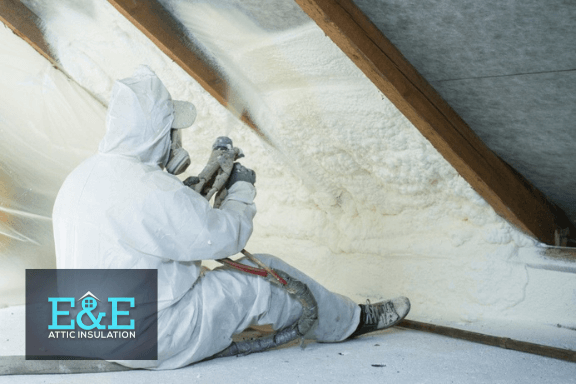
Spray foam is rarely the whole answer. Most projects also call for blown-in, batt, or board in adjacent assemblies.
When blown-in is the better fit: vented attics with adequate access, installed to the recommended depth.
Learn moreWhole-home retrofits where spray foam is part of a larger comfort and air-sealing scope.
Learn moreMetal-framed commercial assemblies and Title 24-driven projects across Southern California.
Learn moreRecent feedback from cathedral ceiling, multifamily, and large retrofit work.
★★★★★
It was a pleasure to work with Joseph and his insulation team. My scope of work was for insulating a cathedral ceiling. They showed up on time, stand by their work, have all of their equipment calibrated.
Francisco B. · Homeowner · Cathedral-Ceiling Install
★★★★★
Full attic clean-out, asbestos ducting remediation, and installation of a new plenum and new ducts, air sealing, rodent proofing, radiant barriers and R-38 batts. They got it done on short notice, during the holidays.
Stuart S. · Local Guide · Large Attic Retrofit
★★★★★
E&E Attic Insulation has done a fantastic job on all of our projects. We will keep using them in the future for all of our projects — we design and build apartment buildings.
Daniel C. · Multifamily Developer · Repeat Customer
Share your project details and we will help you choose the right insulation approach for the structure.
Tell us where the project is located and what you want the insulation to improve.